
Learning More About Tooth Extractions at Bense & Lopatofsky Dental
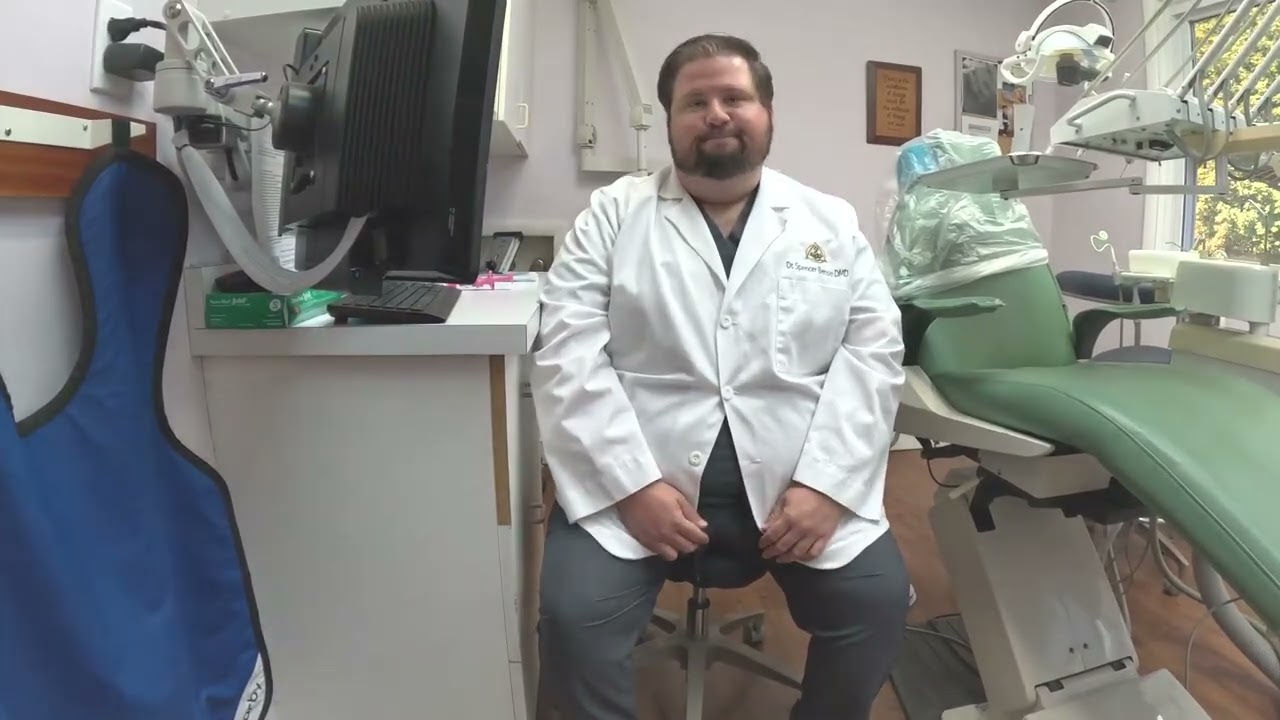
Hello, I'm Dr. Spencer Bense at Bense & Lopatofsky Dental. Today I'm going to answer some of the most common questions about tooth extractions.
What is a dental tooth extraction?
A dental extraction is when a tooth is removed either because the tooth is infected or broken and is beyond repair, or from a case of trauma where a tooth needs to be removed from the surrounding bone and tissue.
What are the reasons tooth extraction may be necessary?
A tooth extraction is necessary either in cases where the tooth is infected, where the patient does not choose to do a root canal to try to save the tooth, or when the tooth structure is decayed or broken beyond repair with a filling or a crown, or in cases of trauma where the surrounding tissue supporting the tooth is compromised.
What are the types of tooth extraction?
There are two types of extractions: simple extraction or routine extraction, and surgical extraction. A simple or routine extraction is where the tissue around the tooth is gently loosened, and the tooth is gently removed from the surrounding bone. A surgical extraction is where the tooth is usually more broken and more difficult to be removed. You have to take away some of the surrounding tissue to gain a better purchase to grab the tooth and remove it from the bone. Ultimately, with either type, the tooth is removed.
When would a dentist recommend a wisdom tooth extraction?
A dentist would recommend a wisdom tooth extraction in cases where the pressure of that tooth coming in is starting to put pressure on other teeth, or the teeth are in such a way that they're not cleanable. There's not enough room for that wisdom tooth to come in and erupt fully like the natural teeth. It's very common in people in their late teens to early 20s to have wisdom teeth removed. They can be removed many years after that as well.
The most common reason is that the teeth, because they're so far in the back, are very difficult to keep clean and need to be extracted to allow better cleanability or to keep other teeth from being decayed because of that tooth.
When would braces require tooth extraction?
Braces would require tooth extraction when there is a case of crowding where the orthodontist doesn't have enough room to better align the teeth. A tooth could be removed in cases like that, allowing more space for the orthodontist to move the teeth around and better align them.
Is tooth extraction and filling advisable for young children?
Tooth extraction and fillings can be done on younger patients. Sadly, there are very young patients who have deep cavities and abscesses or infections that need to be extracted. Often, a space maintainer is put in to help hold that position until the adult tooth can come back. Fillings could be done on young teeth as well, but again, that depends on how much tooth structure is remaining. Is the tooth healthy enough to be restored?
If I have gum disease, when would tooth extraction become necessary?
With gum disease, the issue and tooth extraction come down to the gum disease actually destroying, in severe cases, the surrounding bone and tissue around the tooth. If there is gum disease and there's a lack of support, usually the teeth are very loose because the bone gets taken away in those severe cases. When that happens, because the tooth is so loose, there is often pain when biting or eating, or the gums can become infected around that tooth, in which case the tooth is just not fixable due to the severity of the bone loss, and that's when extractions happen.
Are all tooth extractions considered oral surgery?
Tooth removal or tooth extraction is considered oral surgery, but I don't want that to be misconstrued as something inherently painful or very difficult. Often, it's not. Yes, technically it is oral surgery, but it is not a surgery where you have to be asleep and expect a lot of post-op pain.
What is the difference between simple versus surgical tooth removal?
A simple extraction is when you gently loosen the tissue around the tooth to get the tooth to move a little bit and remove it without complication. A surgical extraction usually involves a more complicated tooth, often more broken and decayed, requiring more technique to remove. Often, you have to remove some of the tissue surrounding that tooth to gain better access to gently remove the tooth from its extraction site. In either case, both surgical or routine extractions result in the tooth being removed.
Where should I go if I need an emergency tooth extraction?
If you need an emergency tooth extraction, the best place is here at Bense & Lopatofsky Dental. We offer emergency care for you. The best way to contact us is by calling the office during office hours, Monday through Thursday from 8:00 a.m. to 5:00 p.m. at (570) 682-5050. In severe cases after hours, the office provides our home address and home number where we can be reached to set up an appointment after hours.

How long does a tooth extraction procedure take?
A tooth extraction procedure can be as quick as a few minutes to 10 to 15 minutes. Most commonly, we schedule an hour-long appointment with our patients. Most of that time is spent ensuring the patient is comfortably numb so that when we start the procedure, we know you're comfortable, your questions have been answered, and you're ready for the extraction.
We will not start until we know you are comfortable, your questions have been answered, and you understand the procedure.
After that, the procedure can take several minutes to maybe a half hour if the extraction is very complicated. Most of the time, it's several minutes, usually less than 10 minutes.
Will I need dental implants after a tooth extraction?
Not necessarily. You don't necessarily need dental implants after a tooth extraction. That is an option after extractions, but options for removing and replacing teeth after extractions could include a bridge, removable partial dentures, dentures, full dentures in cases of no teeth remaining, dental implants, or bridges. There is also the option to not replace that tooth.
Will a dentist put me to sleep during the tooth extraction?
Most commonly, extractions are done under local anesthesia, meaning you're just numb and fully awake. In cases where someone is very anxious and would require sedation, such as going to sleep, that would need to be done either with a general dentist who has undergone accelerated training and continuing education in offering IV sedation, where a patient would be put to sleep. Most commonly, no, you would not be put to sleep; you would just be numbed up during the extraction.
How do I brush my teeth after a tooth extraction?
After a tooth extraction, it is very important to brush and floss your teeth. You want to take care when brushing and flossing to stay away from the extraction site and be very gentle. You also don't want to spit after the extraction. Instead, gently swish water around or use a very diluted mouthwash, hold your head over the sink, and let everything dribble out. It is very important to brush and floss your teeth after an extraction.
What should I know about tooth extraction after care and recovery?
The most common thing about aftercare and recovery after dental extractions is to expect some soreness. A tooth extraction is a surgical procedure involving removing a tooth from the surrounding bone and gums, so it will be a little sore. I recommend listening to the recommendations from either myself or Dr. Lopatofsky on pain management strategies, ensuring you eat something after the extraction, drinking plenty of water, and making sure you're brushing and taking it easy.
Most of the time, I want you to relax and take it easy the rest of the day. It's a great day to sit on the couch, watch some movies, maybe read a nice book, go for a gentle stroll, but nothing strenuous or involving heavy physical activity. It's a day to relax and recover, letting your body heal.
Why should one avoid rinsing after getting a tooth extraction?
The most common reason to avoid rinsing after a tooth extraction is to let the blood clot stay in place. If the blood clot is removed from the extraction site due to aggressive rinsing or spitting, you can get what's called a dry socket. A dry socket can be incredibly uncomfortable after an extraction and is sometimes worse than the actual toothache or the extraction itself. You want to avoid any type of spitting, smoking, drinking through a straw, aggressive rinsing, or anything like that.
What is a dry socket and how can I avoid it after a tooth extraction?
A dry socket occurs when the blood clot in the extraction site is lost. When the blood clot is lost, the bone where that tooth was is exposed, and the air in your mouth dries out that bone, causing pain in the jaw. The best way to avoid that situation is to have packing and stitches placed after the extraction, which both myself and Dr. Lopatofsky do routinely. We also recommend avoiding spitting, drinking through a straw, and smoking. We don't want any smoking, drinking through a straw, or aggressive rinsing for 3 days following the extraction minimally.
How long should I wait to exercise after a tooth extraction?
The safe answer is that everybody is different. For a very routine extraction that goes well, I would give it 24 to 48 hours before exercising. For more complicated extractions, the more surgical extractions, I would recommend waiting longer, between 5 and 7 days for really strenuous exercise. I would avoid lifting heavy for about 10 days to two weeks, avoiding heavy weight lifting and strenuous activities. Everybody's healing is different.
How long should it take to recover from a tooth extraction?
Everybody's recovery is different. Generally, with stitches and packing in place, healing can take usually between 2 and 3 weeks for the extraction site to fully close. Most of the discomfort associated with a tooth extraction is in the first 2 to 3 days following the extraction. So healing can take a little longer for that wound to fully close, but the sutures and packing really help to accelerate that.
When should I schedule an appointment for a tooth extraction?
The best time to schedule an appointment for a tooth extraction is when a dentist recommends it. You don't want to wait until you're swollen and experiencing aching, throbbing pain that's keeping you up at night. That's the worst time to get an extraction because you're nervous, anxious, in pain, and swollen. If the dentist has discussed with you that the tooth is very compromised and likely needs to be extracted, it's better to do that sooner than later to avoid the pain and swelling that can happen if it goes unnoticed.
I hope we've been able to answer some of your questions on tooth extraction, but if you have additional questions or if you're ready to take action, please give us a call at (570) 682-5050, or schedule below! We are here to help you.